Our New FDA-Approved Treatment: Learn More

Characterization of the Safety Profile of Taletrectinib in Patients With Advanced ROS1+ Non-Small Cell Lung Cancer: Results From TRUST-I and TRUST-II

Yasir Elamin,1 Scott Owen,2 Wei Li,3 Laura Lourdes,4 Melvin Rivera,1 Tonia Doerksen,2 Yongchang Zhang,5 Feiwu Ran,6 Wei Wang,6 Xianyu Zhang,6 Wenfeng Chen,6 Huijie Fan,7 Jorge Nieva,8 Maurice Pérol9

1MD Anderson Cancer Center, University of Texas, Houston, TX, USA; 2McGill University Health Centre, Montreal, QC, Canada; 3Shanghai Pulmonary Hospital and Thoracic Cancer Institute, Tongji University School of Medicine, Shanghai, China; 4Cancer Specialists of North Florida, Jacksonville, FL, USA; 5Hunan Cancer Hospital, The Affiliated Cancer Hospital of Xiangya School of Medicine, Central South University, Changsha, China; 6Nuvation Bio Inc, New York, NY, USA; 7The First Affiliated Hospital of Zhengzhou University, Zhengzhou, China; 8Norris Comprehensive Cancer Center, University of Southern California, Los Angeles, CA, USA; 9Léon Bérard Cancer Center, Lyon, France

Presented at the European Lung Cancer Congress | March 25–28, 2026 | Copenhagen, Denmark

For more information, please contact Dr Yasir Elamin: YYElamin@mdanderson.org

Jump to a section:

Background

  • Taletrectinib is a next-generation, CNS-active, selective ROS1 TKI approved in the US, Japan, and China for the treatment of patients with locally advanced/metastatic ROS1+ NSCLC1–5
  • Taletrectinib demonstrated robust efficacy, including IC activity and efficacy against G2032R mutations, with a manageable safety profile in TKI-naïve and TKI-pretreated patients with ROS1+ NSCLC in the Phase 2 TRUST-I (NCT04395677) and TRUST-II (NCT04919811) studies6
  • Here we report efficacy data from TRUST-I and TRUST-II and updated pooled safety data, with a focus on clinically impactful AEs

Methods

  • The study designs of TRUST-I and TRUST-II have been previously reported6
  • The efficacy population included patients from TRUST-I and TRUST-II with ≥1 measurable lesion at baseline per RECIST v1.1 by IRC who started treatment on taletrectinib 600 mg QD
  • The safety population included all patients with ROS1+ NSCLC from Phase 1 and 2 studies who received ≥1 dose(s) of taletrectinib 600 mg QD

Efficacy

Patient Demographics and Baseline Characteristics
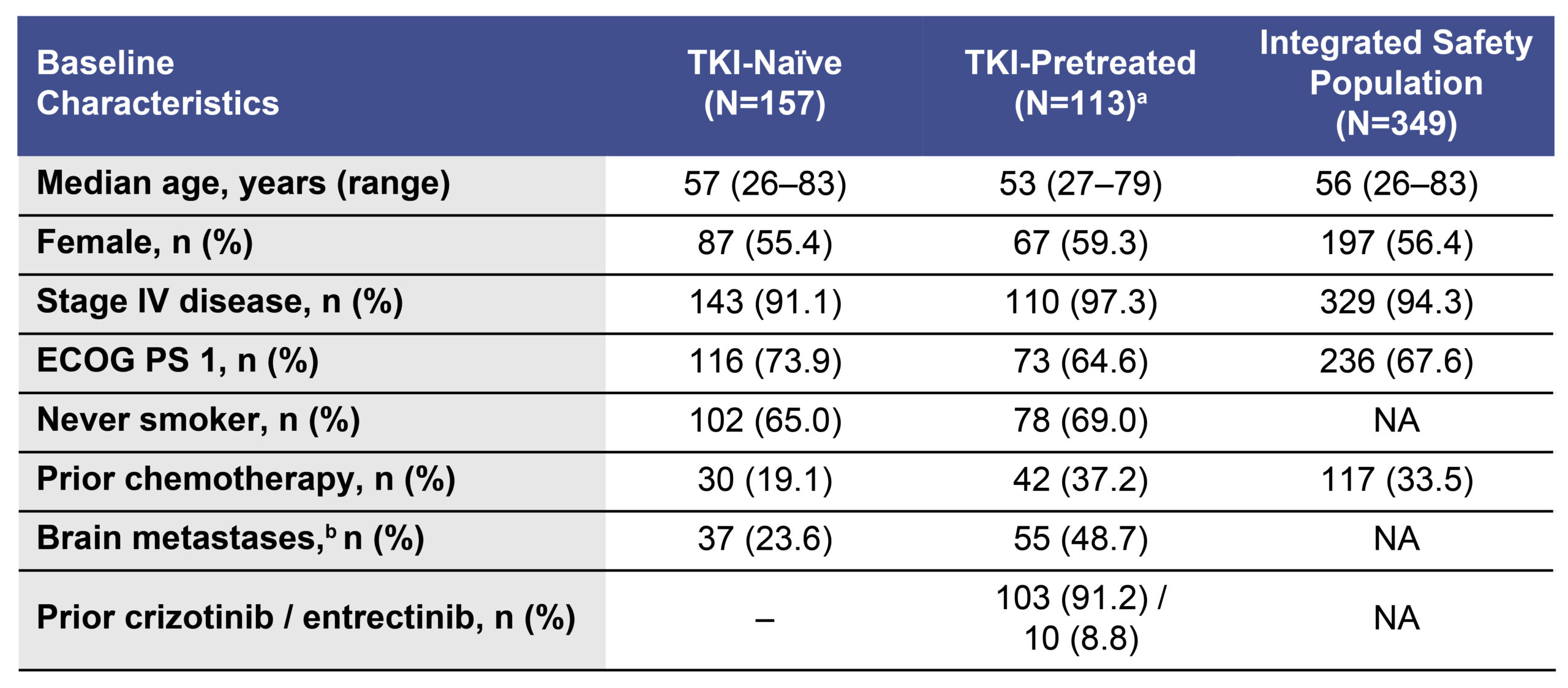
aTKI-pretreated patients in the efficacy population received one prior TKI. bAssessed by IRC per mRECIST v1.1.

Efficacy Summary
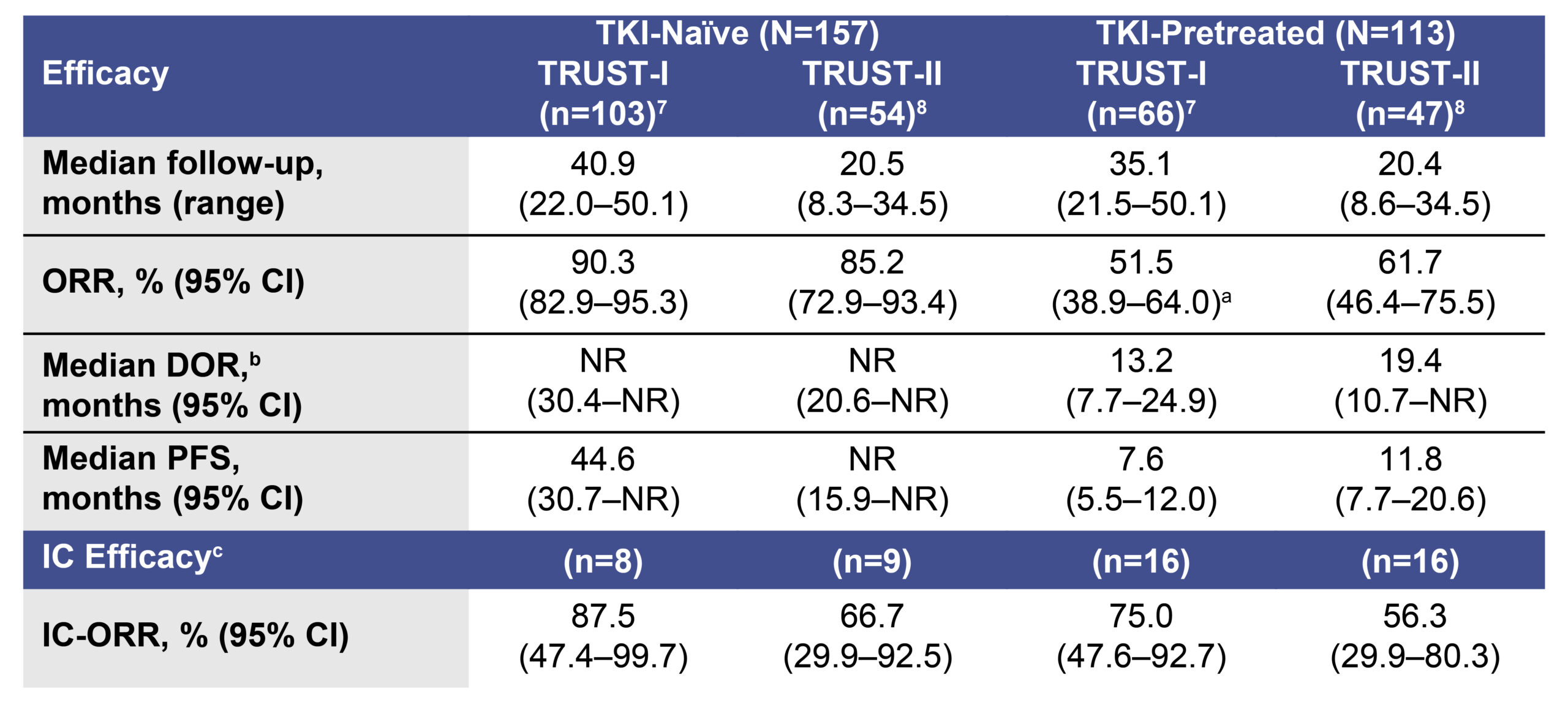
Data cutoff: October 28, 2024. aResponses were observed in 8/12 patients with G2032R mutations (ORR 66.7% [95% CI 34.9–90.1]). bDOR reported only for patients with a complete or partial tumor response. cAssessed by IRC per mRECIST v1.1 in patients with ≥1 measurable baseline brain metastasis.

Safety

TEAEs in the Integrated Safety Population

  • As of October 28, 2024, the integrated safety population included 349 patients with ROS1+ NSCLC from Phase 1 and Phase 2 studies who received ≥1 dose(s) of taletrectinib 600 mg QD
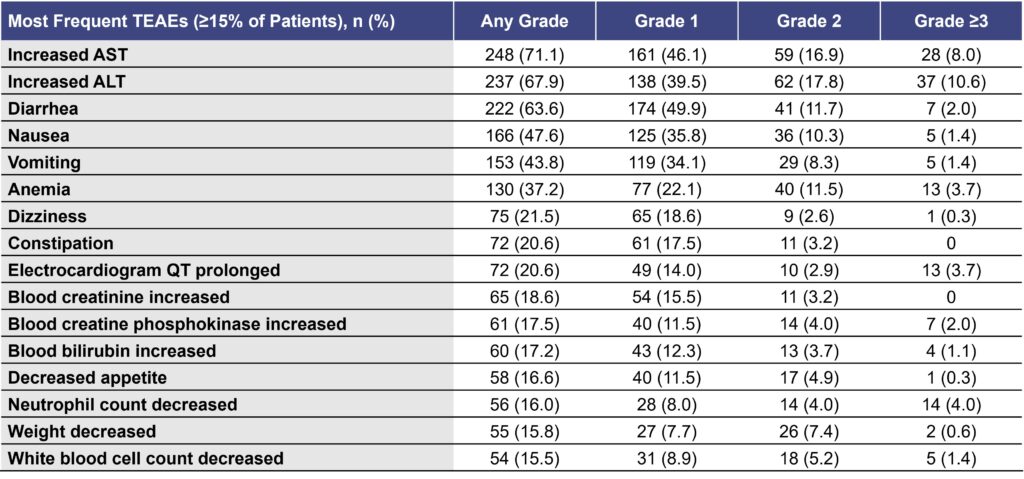
  • The most common (any grade) TEAEs were increased AST, increased ALT, diarrhea, nausea, and vomiting (Supplement)
    • Increased AST/ALT were mostly low grade and only led to treatment discontinuation in one patient; GI events were mostly Grade 1, occurred early during treatment and were transient (Supplement)
  • TEAEs led to dose interruptions in 40.7% of patients, dose reductions in 28.9%, and treatment discontinuations in 7.2%
    • Dose reductions did not affect efficacy (Supplement)

Treatment-Related AEs Associated With TRK Inhibition

  • Some ROS1 TKIs also inhibit TRK proteins, which can lead to neurologic toxicities that may impact patient quality of life9
  • Taletrectinib was associated with low rates of neurologic treatment-related AEs, which were mostly Grade 1 and led to few dose reductions and no treatment discontinuations
    • TEAEs associated with TRK inhibition are included in the Supplement

Treatment-Related AEs Associated With TRK Inhibition (N=349)a
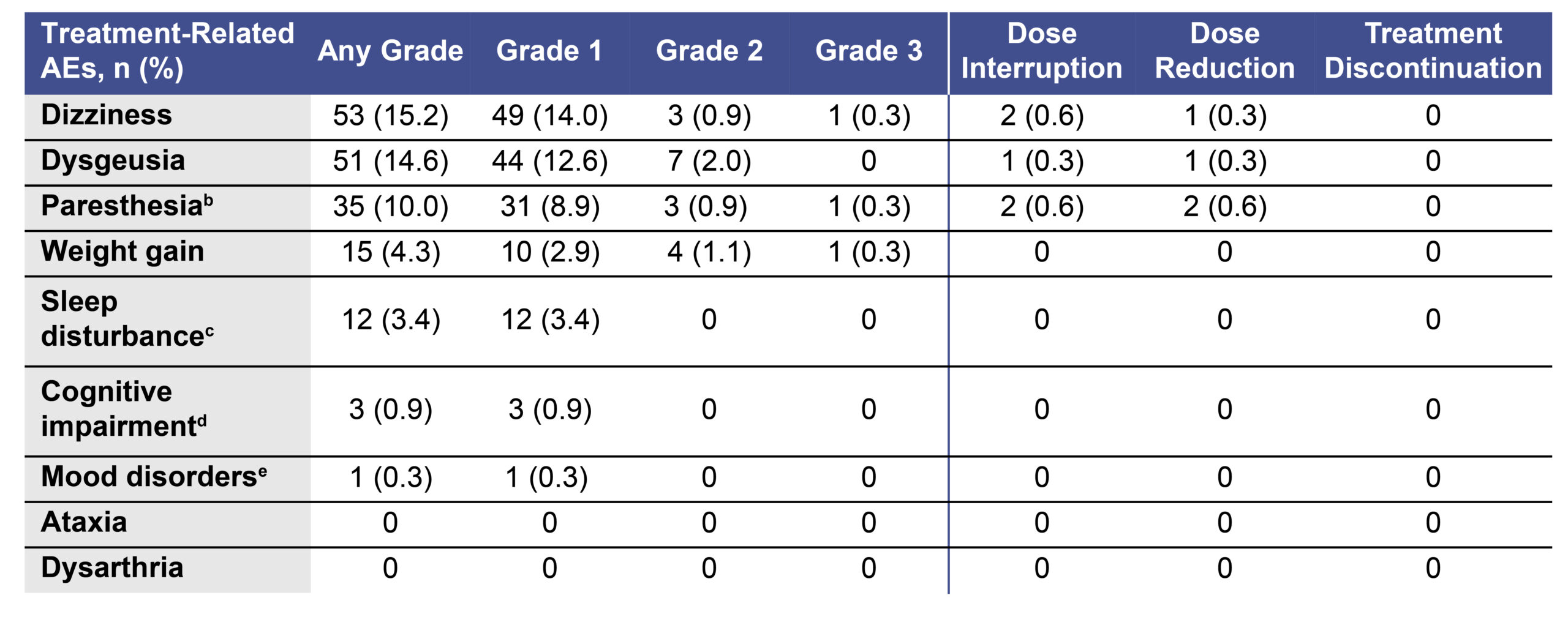
Data cutoff: October 28, 2024. aThe inclusion of treatment-related AEs in the table is based on AEs commonly attributed to TRK inhibition by other ROS1/TRK inhibitors. Withdrawal pain has been associated with TRK inhibition. Clinical and nonclinical data do not suggest a risk of physical dependence and subsequent withdrawal symptoms with cessation of taletrectinib. bGrouped term for paresthesia, hyperesthesia, hypoesthesia, dysesthesia, and anesthesia. cGrouped term for somnolence, insomnia, and sleep disorder. dGrouped term for cognitive disorder, dementia, disturbance in attention, mental impairment, confusional state, delirium, memory impairment, and amnesia. eGrouped term for depression and anxiety.

TEAEs Were Similar Regardless of Receipt of Prior Anticancer Therapiesa
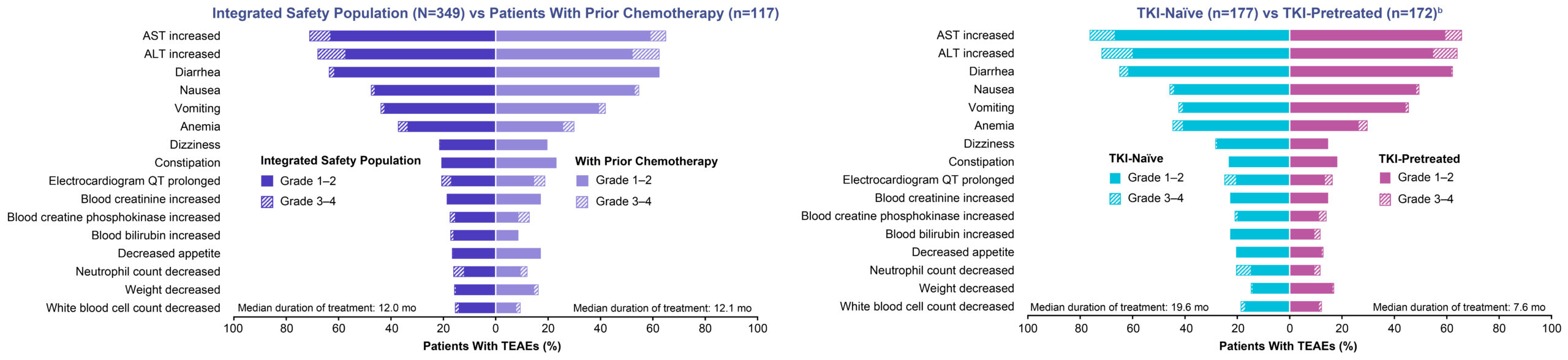
Data cutoff: October 28, 2024. aTEAEs shown are those that occurred in ≥15% of patients in the integrated safety population. bTKI-pretreated patients in the safety population may have received ≥1 prior TKI.

Conclusions

  • Taletrectinib demonstrated robust efficacy in both TKI-naïve and TKI-pretreated patients with advanced ROS1+ NSCLC
  • The safety profile of taletrectinib was manageable, with low rates of dose reductions and discontinuations due to TEAEs, and was not affected by receipt of prior anticancer therapies
  • Neurologic treatment-related AEs associated with TRK inhibition, which may impact patient quality of life, occurred infrequently with taletrectinib, were mostly Grade 1, and resulted in few dose reductions and no treatment discontinuations

Supplement

TEAEs in ≥15% of Patients (N=349)a

Data cutoff: October 28, 2024. aThe safety population included patients with ROS1+ NSCLC who received ≥1 dose(s) of taletrectinib 600 mg QD from Phase 2 trials (TRUST-I and TRUST-II) and a Phase 1 trial (J102).

TEAEs of Clinical Interest (N=349)a
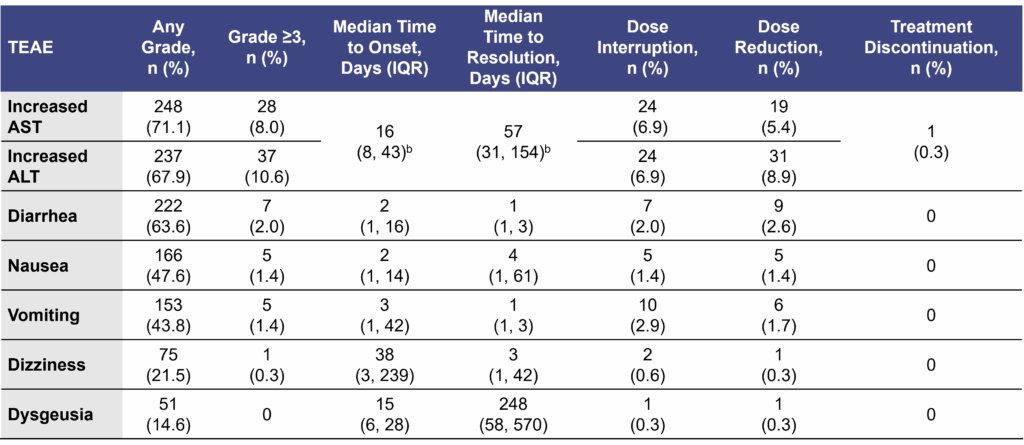
Data cutoff: October 28, 2024. aThe safety population included patients with ROS1+ NSCLC who received ≥1 dose(s) of taletrectinib 600 mg QD from Phase 2 trials (TRUST-I and TRUST-II) and a Phase 1 trial (J102). bMedian time to onset for Grade ≥3 increased AST/ALT was 43 days (IQR: 22, 86) and median time to resolution was 13 days (IQR: 8, 19.5). These results are based on laboratory data.

TEAEs Associated With TRK Inhibition (N=349)a
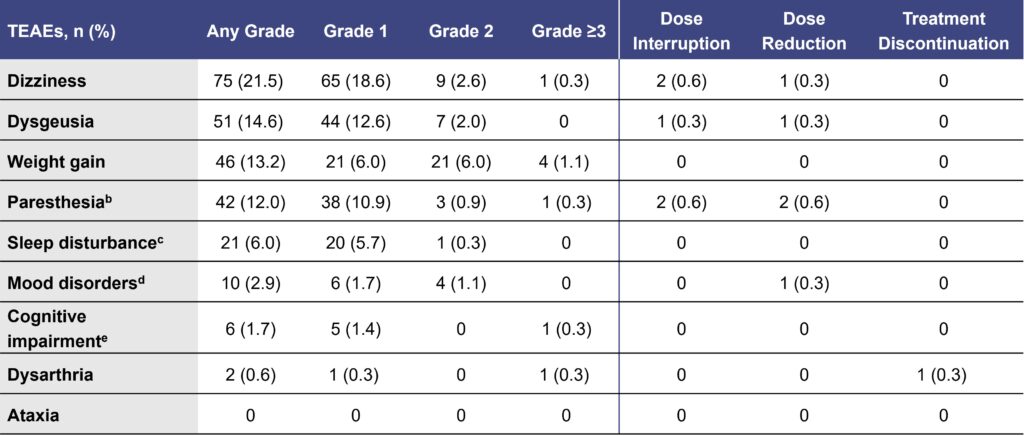
Data cutoff: October 28, 2024. aThe inclusion of treatment-related AEs in the table is based on AEs commonly attributed to TRK inhibition by other ROS1/TRK inhibitors. Withdrawal pain has been associated with TRK inhibition. Clinical and nonclinical data do not suggest a risk of physical dependence and subsequent withdrawal symptoms with cessation of taletrectinib. bGrouped term for paresthesia, hyperesthesia, hypoesthesia, dysesthesia, and anesthesia. cGrouped term for somnolence, insomnia, and sleep disorder. dGrouped term for depression and anxiety. eGrouped term for cognitive disorder, dementia, disturbance in attention, mental impairment, confusional state, delirium, memory impairment, and amnesia.

DOR and PFS Across the Efficacy Population Were Similar Regardless of Dose Reduction Status in TKI-Naïve Patients (N=157)10,a
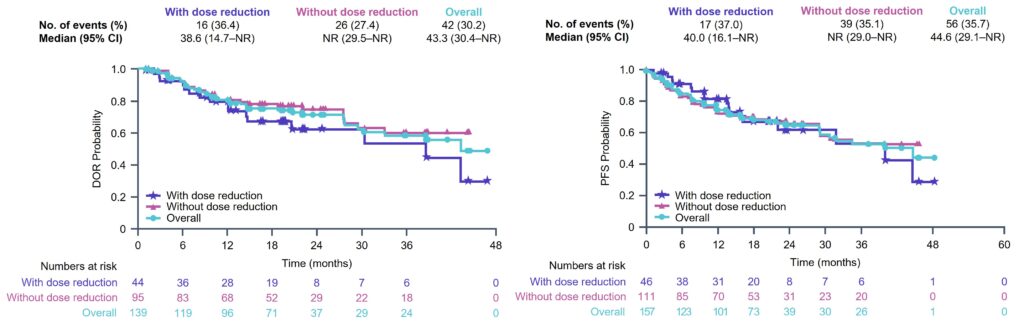
Data cutoff: October 28, 2024.aThe efficacy population included patients from TRUST-I and TRUST-II with ≥1 measurable lesion at baseline per RECIST v1.1 by IRC who started treatment on taletrectinib 600 mg QD.

DOR and PFS Across the Efficacy Population Were Similar Regardless of Dose Reduction Status in TKI-Pretreated Patients (N=113)10,a
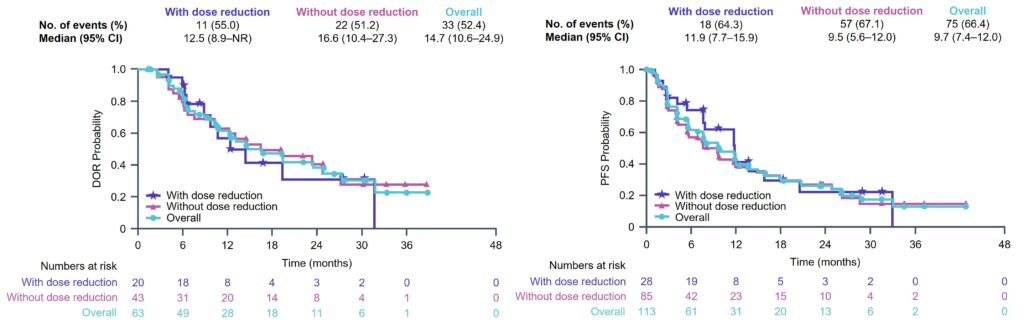
Data cutoff: October 28, 2024.aThe efficacy population included patients from TRUST-I and TRUST-II with ≥1 measurable lesion at baseline per RECIST v1.1 by IRC who started treatment on taletrectinib 600 mg QD.


Abbreviations

AE, adverse event; ALT, alanine aminotransferase; AST, aspartate aminotransferase; CI, confidence interval; CNS, central nervous system; DOR, duration of response; ECOG PS, Eastern Cooperative Oncology Group performance status; GI, gastrointestinal; IC, intracranial; IRC, independent review committee; IQR, interquartile range; mo, months; (m)RECIST v1.1, (modified) Response Evaluation Criteria in Solid Tumors version 1.1; NA, not available; NR, not reached; NSCLC, non-small cell lung cancer; ORR, objective response rate; PFS, progression-free survival; QD, once daily; ROS1, ROS proto-oncogene 1; TEAE, treatment-emergent adverse event; TKI, tyrosine kinase inhibitor; TRK, tropomyosin receptor kinase; US, United States.

References

  1. Katayama R, et al. Nat Commun 2019;10:3604
  2. Nagasaka M, et al. Future Oncol 2023;19:123–135
  3. IBTROZI® (taletrectinib). Prescribing Information. Nuvation Bio Inc. 2025
  4. Nippon Kayaku. IBTROZI® Capsules 200mg (taletrectinib) has been approved in Japan. Accessed March 5, 2026; https://www.nipponkayaku.co.jp/english/news/detail.php?n=20250919_6G5AI1Y7
  5. Nuvation Bio. Nuvation Bio Receives Approval from China’s NMPA for Taletrectinib. Accessed March 5, 2026; https://investors.nuvationbio.com/news/news-details/2025/Nuvation-Bio-Receives-Approval-from-Chinas-National-Medical-Products-Administration-for-Taletrectinib-for-Patients-with-Advanced-ROS1-positive-Non-Small-Cell-Lung-Cancer/
  6. Pérol M, et al. J Clin Oncol 2025;43:1920–1929
  7. Li W, et al. J Thorac Oncol 2025;20(Suppl 1):S500
  8. Liu G, et al. J Thorac Oncol 2025;20(Suppl 1):S56
  9. Drilon A, et al. Nat Rev Clin Oncol 2021;18:35–55
  10. Pérol M, et al. J Clin Oncol 2025;43(16_suppl):8643

Acknowledgments

We would like to thank all patients who participated in these studies, the study investigators, and their staff. These studies were sponsored by Nuvation Bio Inc. Medical writing support was provided by Lisa Alberts, MPhil, of Ashfield MedComms, an Inizio company, and was funded by Nuvation Bio Inc.

Disclosures

The presenting author, Yasir Elamin, declares the following potential conflicts of interest: Advisory board: AstraZeneca, BluePrint Medicines, BMS, Catalyst Pharmaceuticals, Eli Lilly, Merus, Mirati Therapeutics, Novartis, Nuvation Bio, Sanofi, Spectrum, Taiho, Takeda, Turning Point Therapeutics; Funding to institution: AstraZeneca, BMS, Nuvation Bio, Spectrum, Taiho, Takeda.

Explore our other publications