Our New FDA-Approved Treatment: Learn More

TRUST-II Global Study: Efficacy and Safety of Taletrectinib After Prior Entrectinib Exposure in Patients With Advanced ROS1+ Non-Small Cell Lung Cancer

Filippo de Braud,1 Yuki Shinno,2 Pascale Tomasini,3 Geoffrey Liu,4 Lyudmila Bazhenova,5 Ernest Nadal,6 Wei Wang,7 Xianyu Zhang,7 Santiago Viteri,8 Maurice Pérol9

1University of Milan, Milan, Italy; 2National Cancer Center Hospital, Tokyo, Japan; 3Hôpitaux Nord, CHU de Marseille, Marseille, France; 4Princess Margaret Cancer Centre, Temerty School of Medicine, University of Toronto, Toronto, Canada; 5University of California San Diego Moores Cancer Center, San Diego, CA, USA; 6Catalan Institute of Oncology (ICO) IDIBELL, L’Hospitalet, Barcelona, Spain; 7Nuvation Bio, New York, NY, USA; 8UOMI Cancer Center, Clinica Mi Tres Torres, Barcelona, Spain; 9Department of Medical Oncology, Léon Bérard Cancer Center, Lyon, France

Presented at the European Society for Medical Oncology Congress | October 17–21, 2025 | Berlin, Germany

For more information, please contact Prof Filippo de Braud: filippo.debraud@istitutotumori.mi.it

Jump to a section:

Background

  • Taletrectinib is a next-generation, CNS-active, selective, oral ROS1 inhibitor with efficacy against the G2032R resistance mutation1
  • Taletrectinib is currently approved in the United States, China, and Japan for the treatment of adult patients with locally advanced or metastatic ROS1+ NSCLC2–4
  • In the global, Phase 2 TRUST-II study (NCT04919811), taletrectinib showed robust overall and IC responses and a favorable safety profile in both TKI-naïve and TKI-pretreated patients with ROS1+ NSCLC5
  • Here, we report subgroup analyses from TRUST-II in patients who were previously treated with entrectinib, another CNS-active ROS1 TKI

Methods

  • TRUST-II (NCT04919811) is a global, multicenter, pivotal, Phase 2 study of taletrectinib in patients with ROS1+ NSCLC, including both TKI-naïve and TKI-pretreated patients, that was initiated in 2021

TRUST-II Study Design
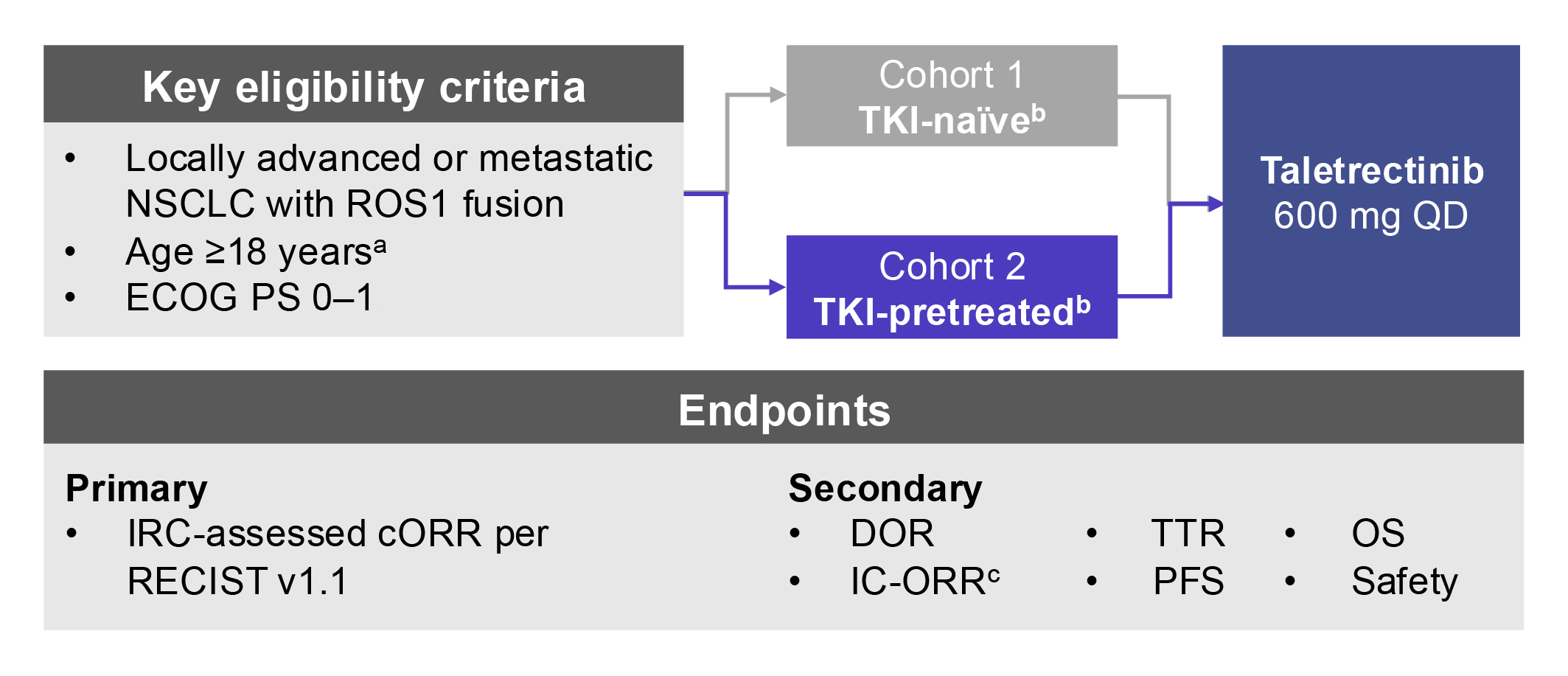
aOr ≥20 years, as required by local regulations. bRegistrational cohorts are shown. cAssessed by IRC per mRECIST v1.1.

  • Patients in Cohort 2 received prior treatment with crizotinib or entrectinib; patients may also have received prior chemotherapy with or without immunotherapy
  • Here, we report efficacy and safety in the 10 patients from Cohort 2 who received prior entrectinib treatment

Results

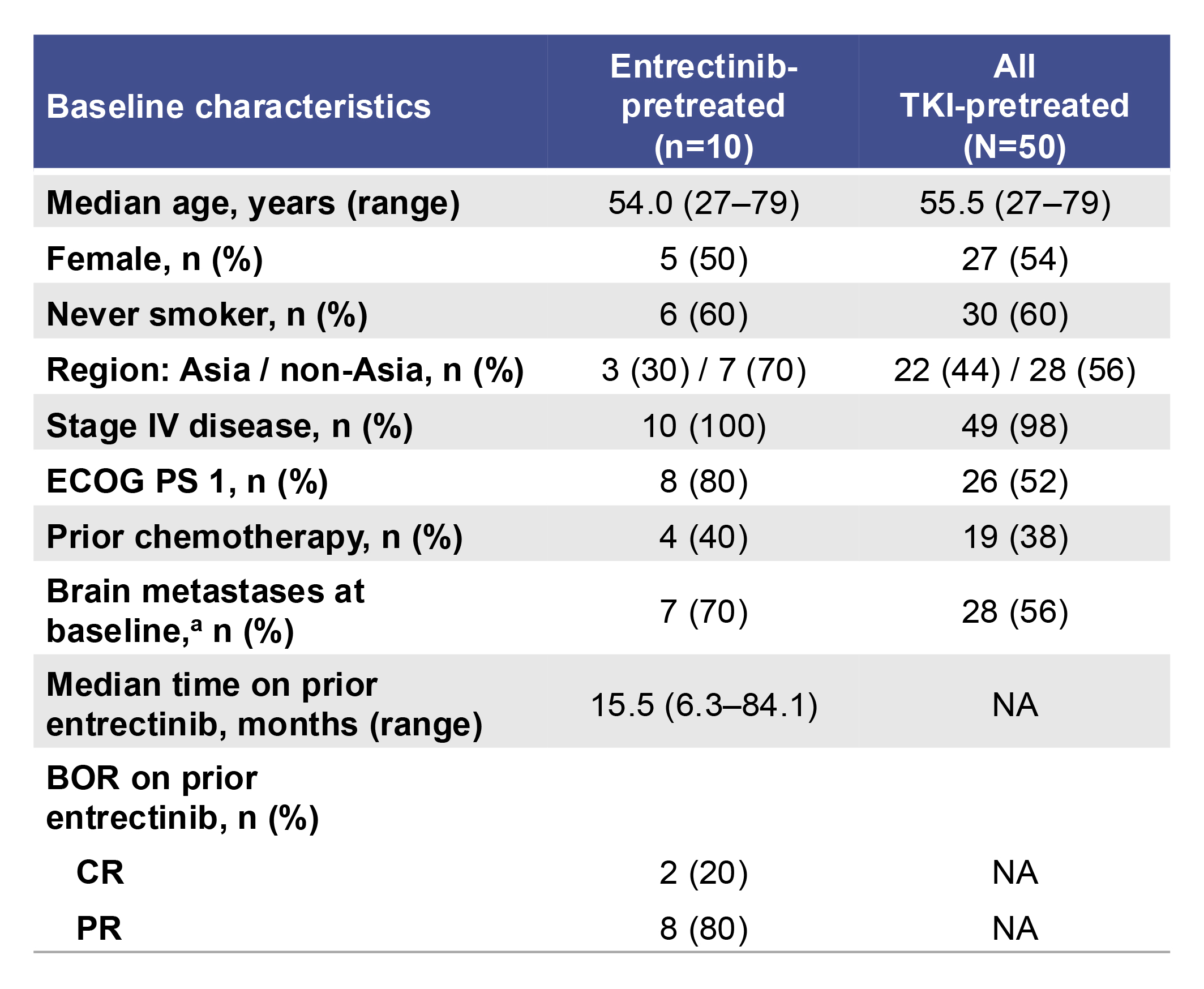
Patient Demographics and Baseline Characteristics
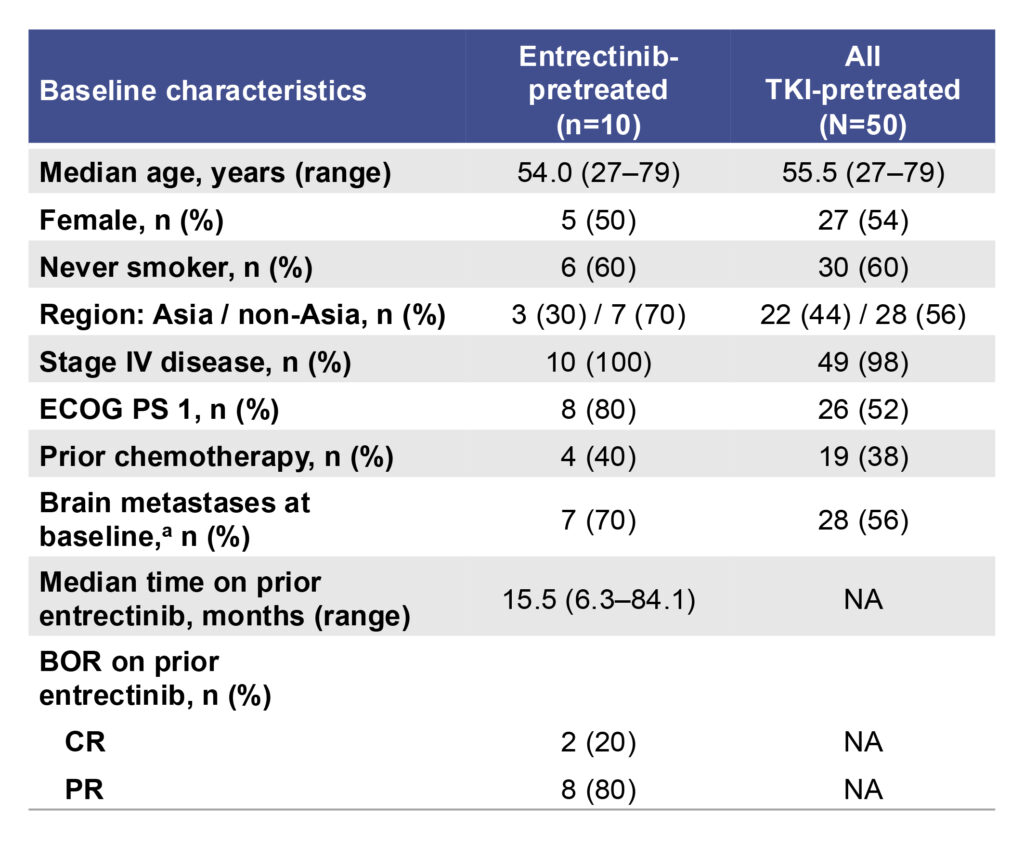
aAssessed by IRC per mRECIST v1.1.

  • Entrectinib was the most recent anticancer therapy in all patients, received immediately prior to taletrectinib
  • All 10 patients experienced disease progression on entrectinib

Results: Efficacy

Tumor Response in Entrectinib-Pretreated Patients
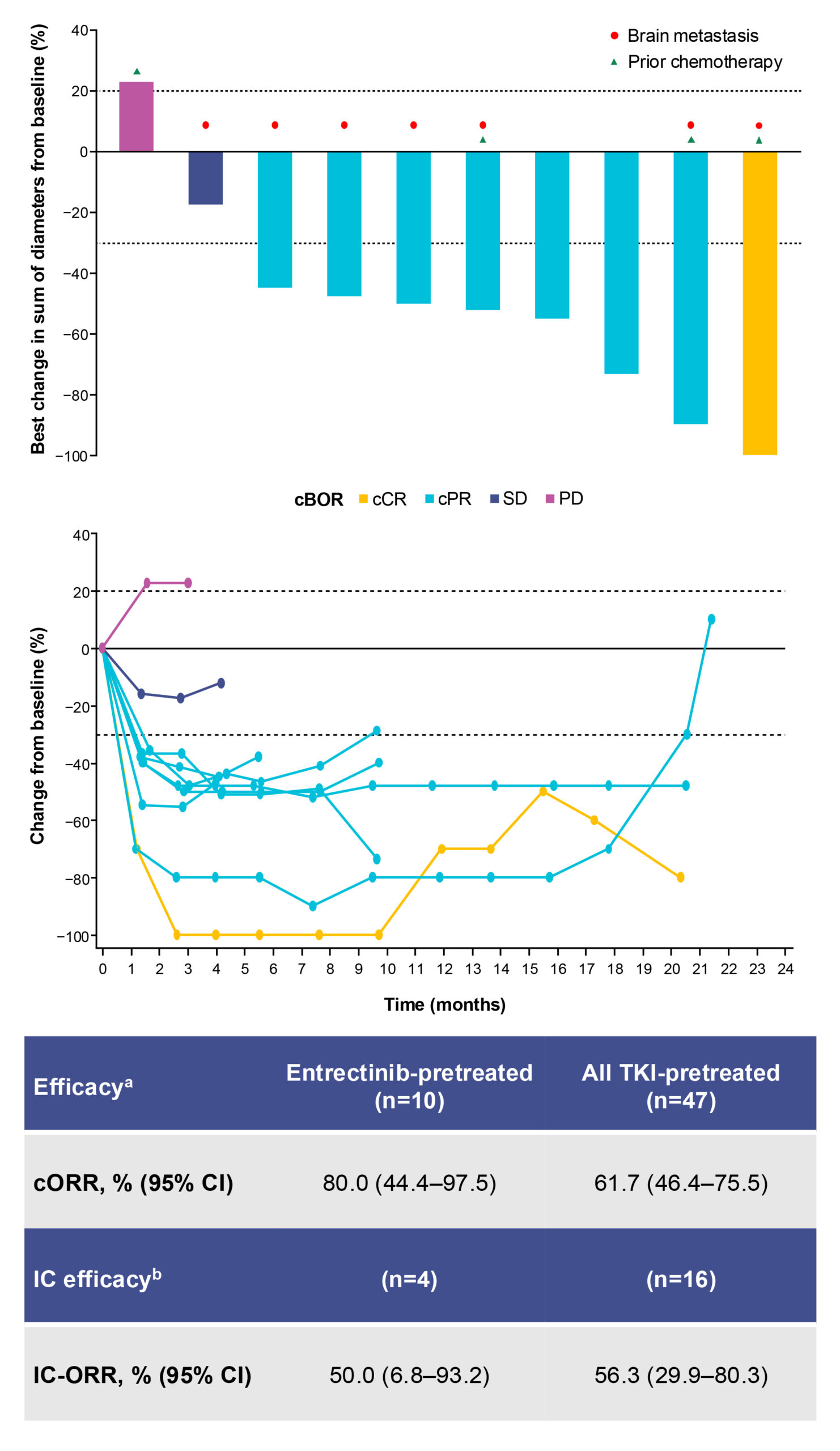
Data cutoff: October 28, 2024. aAssessed by IRC per RECIST v1.1 in patients with ≥1 measurable lesion at baseline who received ≥1 dose of taletrectinib. bAssessed by IRC per mRECIST v1.1 in patients with ≥1 measurable baseline brain metastasis.

  • In entrectinib-pretreated patients, cORR was 80%, including one CR and seven PRs
  • Among four patients with measurable brain metastases, the IC-ORR was 50%

Results: Safety

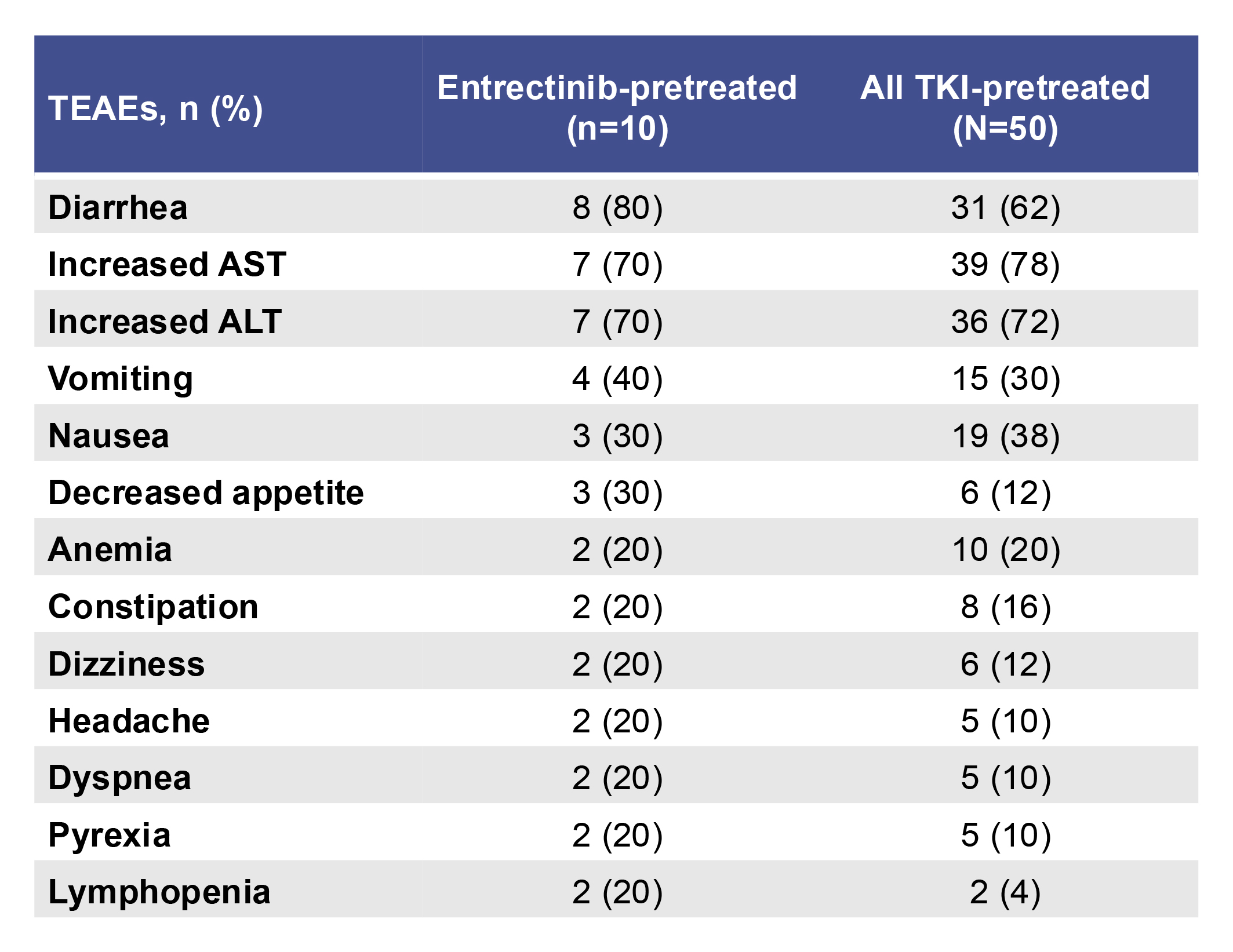
Most Frequent TEAEs (≥20% of Entrectinib-Pretreated Patients)
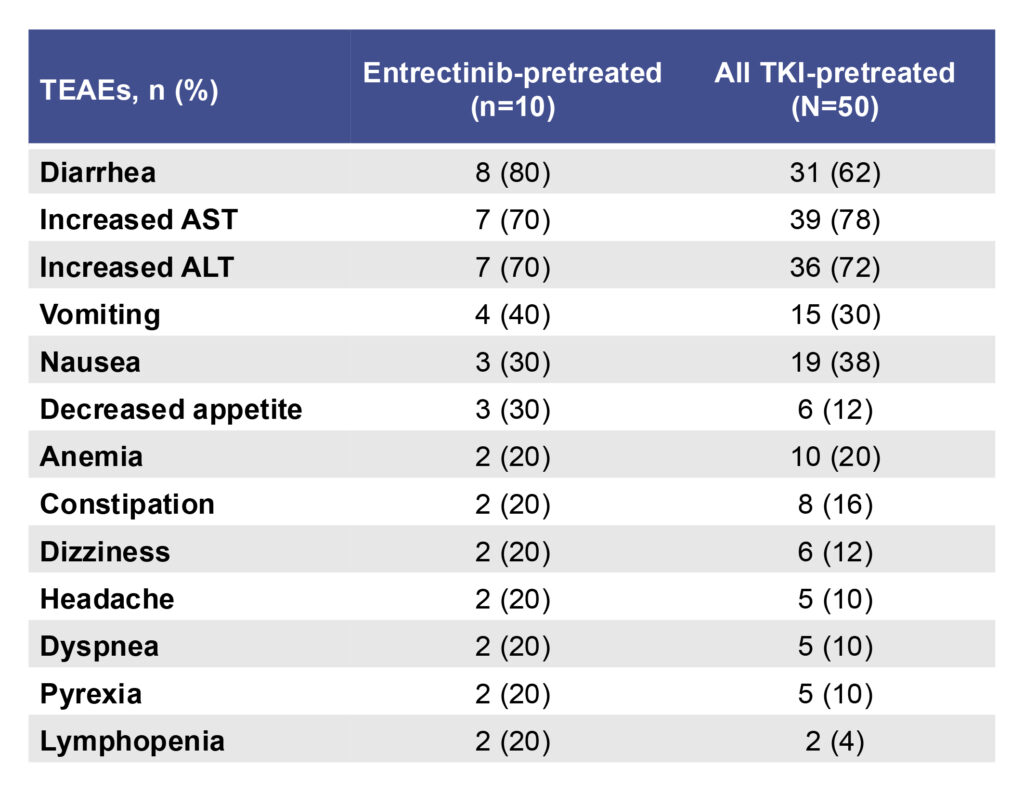
Data cutoff: October 28, 2024.

  • The most frequent TEAEs in both entrectinib-pretreated and all TKI-pretreated groups were mainly Grade 1 and 2
  • AEs of interest commonly associated with entrectinib, such as weight gain, visual disorders, or congestive heart failure, were not observed with taletrectinib in entrectinib-pretreated patients
  • Despite a small sample size, the overall safety profile of taletrectinib in entrectinib-pretreated patients was consistent with that observed in the full TKI-pretreated cohort


Conclusions

  • Taletrectinib demonstrated high overall and IC response rates in patients with ROS1+ NSCLC who were previously treated with entrectinib, another CNS-active ROS1 TKI
  • Among patients previously treated with entrectinib, the safety profile of taletrectinib was consistent with that observed in the full TKI-pretreated cohort
  • These data support the use of taletrectinib as a subsequent treatment option for patients with ROS1+ NSCLC after prior entrectinib treatment

Abbreviations

AE, adverse event; ALT, alanine aminotransferase; AST, aspartate aminotransferase; BOR, best overall response; c, confirmed; CI, confidence interval; CNS, central nervous system; CR, complete response; DOR, duration of response; ECOG PS, Eastern Cooperative Oncology Group performance status; IC, intracranial; IRC, Independent Review Committee; (m)RECIST v1.1, (modified) Response Evaluation Criteria in Solid Tumors version 1.1; NA, not applicable; NSCLC, non-small cell lung cancer; ORR, objective response rate; OS, overall survival;  PD, progressive disease; PFS, progression-free survival; PR, partial response; QD, once daily; ROS1, ROS proto-oncogene 1; SD, stable disease; TEAE, treatment-emergent adverse event; TKI, tyrosine kinase inhibitor; TTR, time to response

References

  1. Katayama R, et al. Nat Commun 2019;10:3604
  2. IBTROZI™ (taletrectinib). Prescribing Information. Nuvation Bio Inc.; 2025
  3. Nuvation Bio Receives Approval from China’s National Medical Products Administration for Taletrectinib for Patients with Advanced ROS1-positive Non-Small Cell Lung Cancer. Nuvation Bio. Accessed September 19, 2025; https://investors.nuvationbio.com/news/news-details/2025/Nuvation-Bio-Receives-Approval-from-Chinas-National-Medical-Products-Administration-for-Taletrectinib-for-Patients-with-Advanced-ROS1-positive-Non-Small-Cell-Lung-Cancer
  4. Nippon Kayaku announces IBTROZICapsules 200mg (taletrectinib) has been approved in Japan for patients with unresectable advanced and/or recurrent ROS1-positive non-small cell lung cancer. Nippon Kayak. Accessed September 19, 2025; https://www.nipponkayaku.co.jp/english/news/detail.php?n=20250919_6G5AI1Y7&year=
  5. Liu G, et al. J Thorac Oncol 2024;19:Suppl_S72–3

Acknowledgments

  • We would like to thank all patients who participated in this study, the study investigators, and their staff
  • Due to current competing interests, Dr Pennell was unable to contribute to the poster development. We thank him for his earlier contributions to the study and the abstract for this publication
  • This study was sponsored by Nuvation Bio Inc.
  • Medical writing support was provided by Flaminia Fenoaltea, MSc, and Lisa Alberts, MPhil, of Ashfield MedComms, an Inizio company, and was funded by Nuvation Bio Inc.

Disclosures

The presenting author, Filippo de Braud, declares the following potential conflicts of interest:
Speakers bureau: Ambrosetti, Bayer, Biotechespert, Bristol Myers Squibb, Dephaforum, ESO, Events, Fare Comunicazione, Ignyta, Incyte, Itanet, Merck, Motore Sanità, Nadirex, Pfizer, Prime Oncology, and Roche; Advisory board: Amgen, AstraZeneca, Bayer, Bristol Myers Squibb, Celgene, Daiichi Sankyo, Dephaforum, Fondazione Menarini, Gentili, Ignyta, Incyte, Lilly, Merck, Novartis, Octimet Oncology, Pfizer, Pharm Research Associates, Pierre Fabre, Roche, Sanofi, Servier, Taiho, and Tiziana Life Sciences; Research grant: Bristol Myers Squibb, Celgene, Darmstadt, Germany, Incyte, Kymab, Merck, Novartis, NMS, the healthcare business of Merck KGaA, Pfizer, Roche, and Tesaro; Principal investigator: Basilea Pharmaceutica, Bristol Myers Squibb, Daiichi Sankyo, Exelixis, Janssen, Ignyta, Kymab, LOXO Oncology, MedImmune, Merck KGaA, MSD, Novartis, Pfizer, Roche, and Tesaro; Consulting: Bristol Myers Squibb, IQVIA, Mattioli 1885, McCann Health, MSD, and Pierre Fabre; Travel expenses: Amgen, Bristol Myers Squibb, Celgene, and Roche.

Explore our other publications