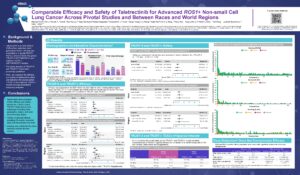
Comparable Efficacy and Safety of Taletrectinib for Advanced ROS1+ Non-small Cell Lung Cancer Across Pivotal Studies and Between Races and World Regions
Maurice Pérol,1 Wei Li,2 Nathan A. Pennell,3 Geoffrey Liu,4 Filippo De Braud,5 Misako Nagasaka,6 Enriqueta Felip,7 Anwen Xiong,2 Yongchang Zhang,8 Huijie Fan,9 Xicheng Wang,10 Feiwu Ran,11 Xianyu Zhang,11 Wenfeng Chen,11 Wei Wang,11 Lyudmila Bazhenova,12 Caicun Zhou2,13
1Department of Medical Oncology, Léon Bérard Cancer Center, Lyon, France; 2Department of Medical Oncology, Shanghai Pulmonary Hospital and Thoracic Cancer Institute, Tongji University School of Medicine, Shanghai, China; 3Cleveland Clinic Taussig Cancer Institute, Cleveland, OH, USA; 4Princess Margaret Cancer Centre, Temerty School of Medicine, University of Toronto, Toronto, Canada; 5University of Milan, Milan, Italy; 6University of California Irvine School of Medicine and Chao Family Comprehensive Cancer Center, Orange, CA, USA; 7Vall d’Hebron University Hospital, Barcelona, Spain; 8Hunan Cancer Hospital, The Affiliated Cancer Hospital of Xiangya School of Medicine, Central South University, Changsha, China; 9The First Affiliated Hospital of Zhengzhou University, Zhengzhou, China; 10The First Affiliated Hospital/School of Clinical Medicine Guangdong Pharmaceutical University, Guangzhou, China; 11Nuvation Bio, New York, NY, USA; 12University of California San Diego Moores Cancer Center, San Diego, CA, USA 13Department of Medical Oncology, East Hospital, Tongji University School of Medicine, Shanghai, China
Presented at the American Society of Clinical Oncology ⏐ May 30–June 3, 2025 ⏐ Chicago, IL, USA
Jump to a section:
Background & Methods
- Taletrectinib is an oral, potent, CNS-active, selective, nextgeneration ROS1 TKI that was evaluated in 2 pivotal ROS1+ NSCLC phase 2 trials: the global TRUST-II (NCT04919811) and regional TRUST-I (NCT04395677) studies
- The study designs of TRUST-II1 and TRUST-I2 have been previously published
- Here, we compare the efficacy and safety of taletrectinib within and between the pivotal global TRUST-II and regional TRUST-I studies through predefined subgroup analyses
Results
Demographics and Baseline Characteristicsa
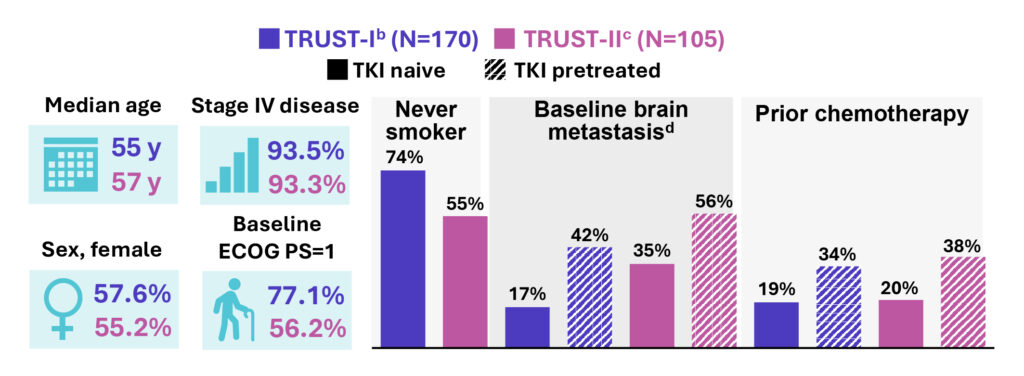
Data cutoff: October 28, 2024. aIn patients treated with taletrectinib 600 mg QD. bTRUST-I was conducted in China. cThe TRUST-II population included only TKI-naive and
TKI-pretreated patients, 47% of whom were geographically Western (North America or Europe) and 53% were Asian (Japan: 24%; Korea: 16%; China: 13%). dBy IRC per mRECIST v1.1.
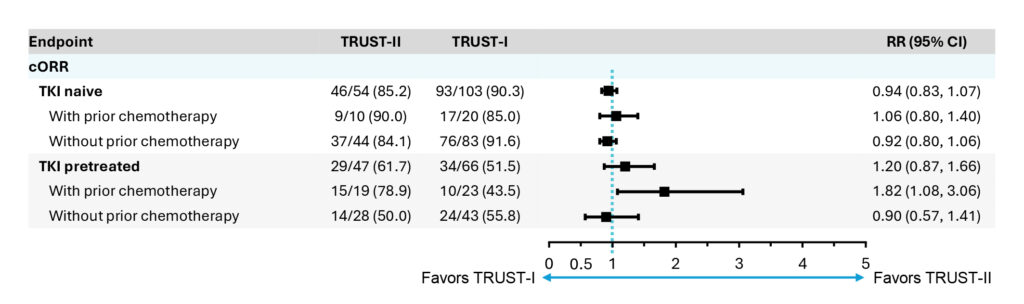
TRUST-II and TRUST-I: Efficacy
- Efficacy was assessed in the REP which included patients with ≥1 measurable baseline lesion per RECIST v1.1 who initiated taletrectinib treatment at 600 mg QD across TKI-naive (n=157) and TKI-pretreated (n=113) cohorts in TRUST-II and TRUST-I
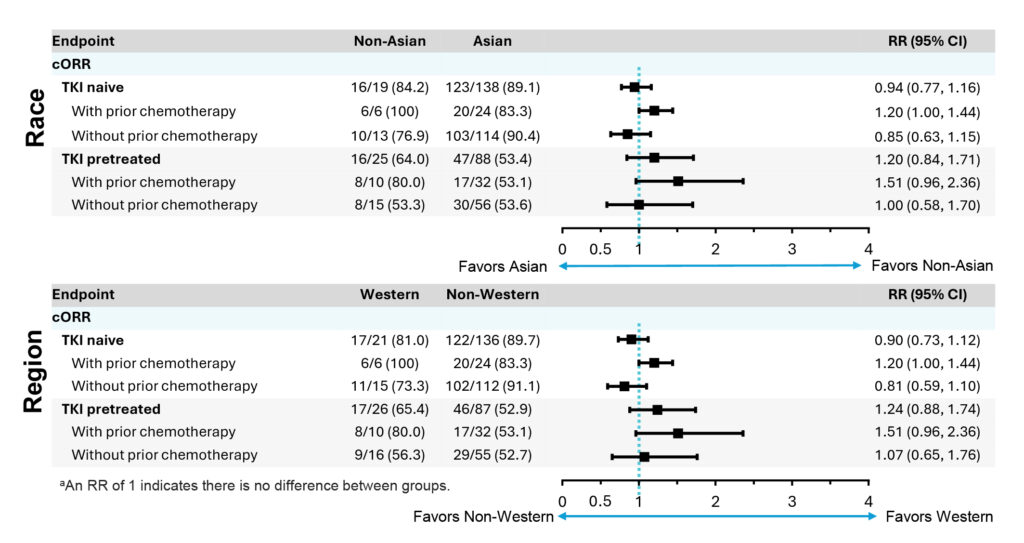
- Comparable efficacy was observed across race and region within TRUST-II (Supplement)
TRUST-II and TRUST-I: Safety
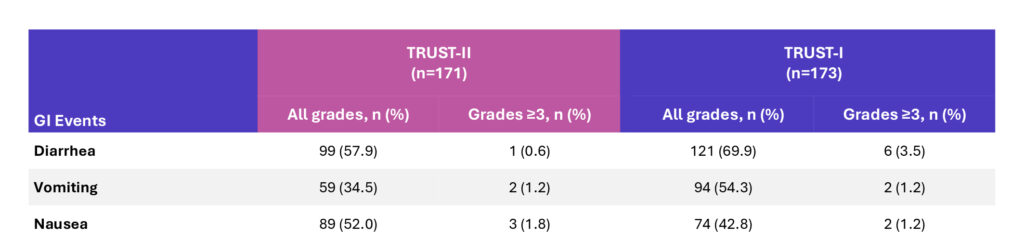
- Safety was assessed in all patients who received ≥1 dose of taletrectinib in TRUST-II (n=171)1 and TRUST-I (n=173)2
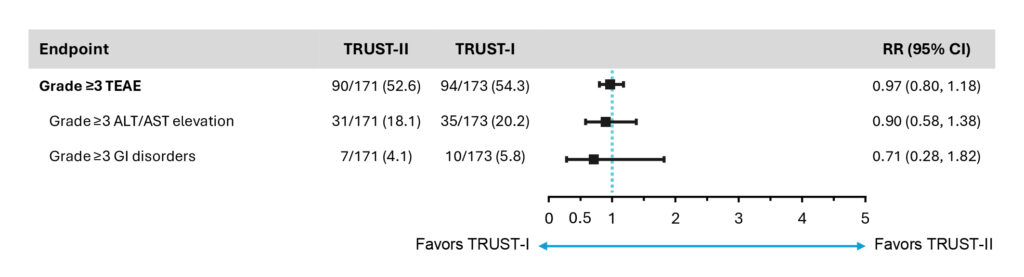
aAn RR of 1 indicates there is no difference between groups. bThe TRUST-II population included patients across cohorts 1 to 5 treated with taletrectinib 600 mg QD.1
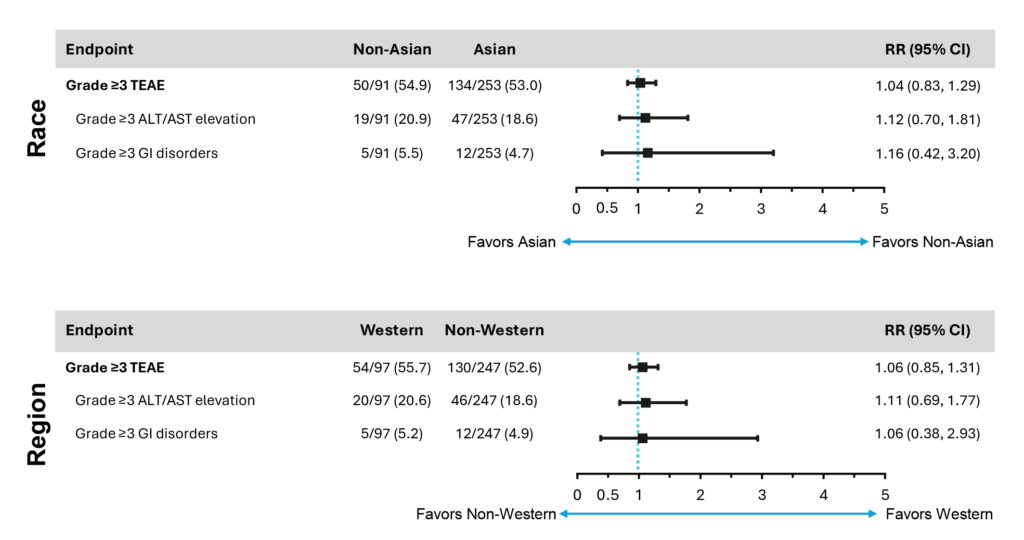
TRUST-II and TRUST-I: TEAEs of Special Interest
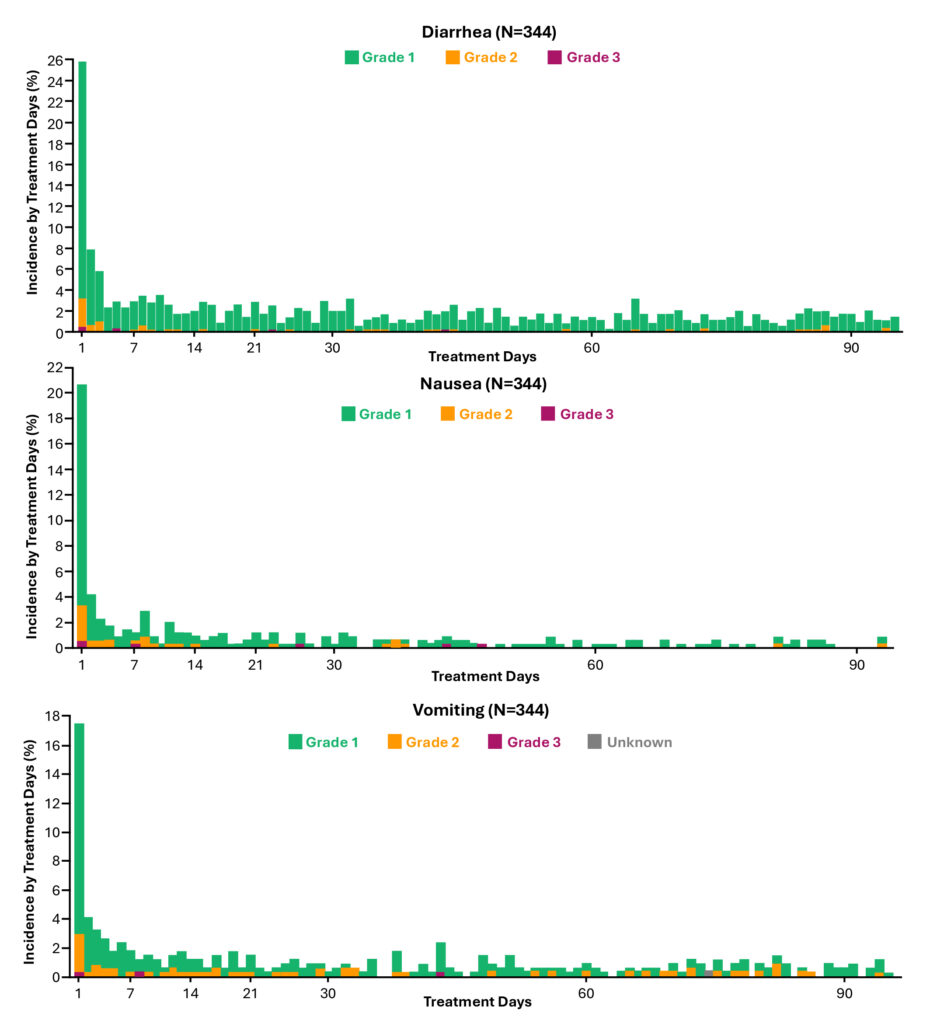
- Due to comparable overall safety across TRUST-II and TRUST-I, a detailed safety characterization of TEAEs of special interest was conducted in a combined population from both studies (Table below and Supplement)
Dose Reductiona Does Not Compromise Efficacy
- DOR and PFS across the efficacy population were comparable regardless of dose reduction status
(Supplement)
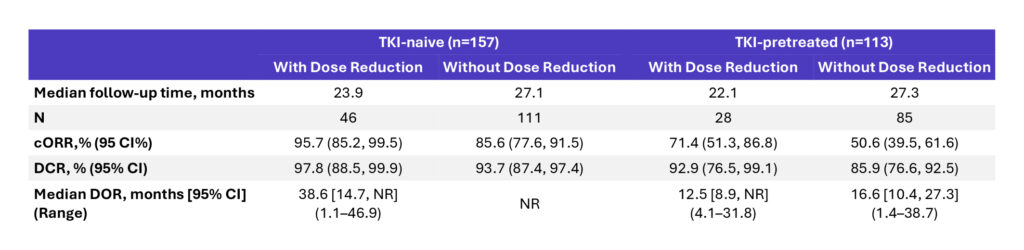
aFollowing grade ≥3 increased ALT/AST, patients in TRUST-I could resume taletrectinib at their original dose or a reduced dose while patients in TRUST-II were required to resume taletrectinib at a reduced dose
Conclusions
- Taletrectinib demonstrated similar efficacy and safety across the TRUST-II and TRUST-I trials and across subgroups including race, geographic region, and prior chemotherapy status
- TEAEs of special interest, including GI events, occurred early and decreased over time
- Efficacy was unaffected by dose reduction across the two cohorts
Supplement
TRUST-II: Comparable Efficacy Across Race, Region, and Prior Chemotherapy in Patients with Advanced ROS1+ NSCLC Treated with Taletrectinib 600 mg QD
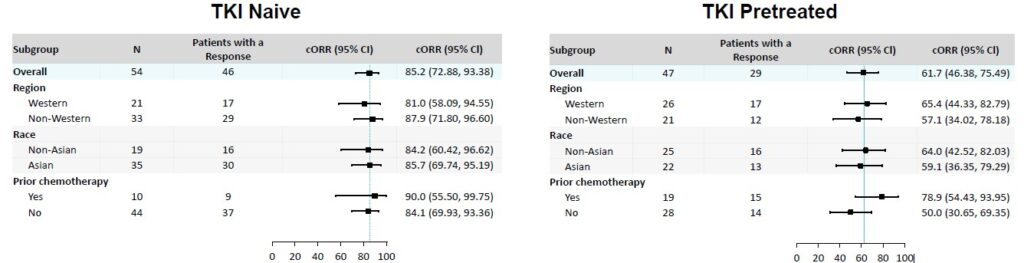
Data cutoff: October 28, 2024. Dashed vertical line represents the overall cORR for TKI-naive patients.
TRUST-II and TRUST-Ia: DOR and PFS Across the Efficacy Population Were Similar Regardless of Dose Reduction Status
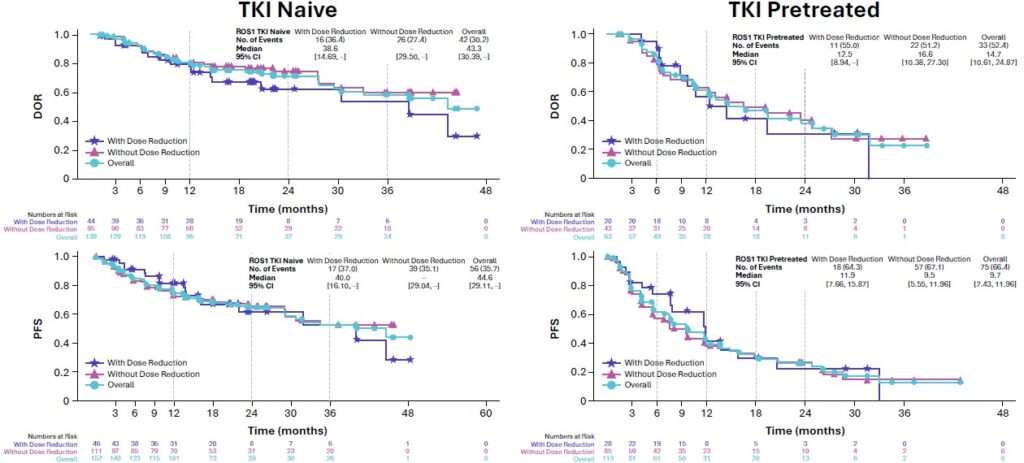
Data cutoff: October 28, 2024. aEfficacy was assessed in the REP which included patients with advanced ROS1+ NSCLC with ≥1 measurable baseline lesion per RECIST v1.1 who initiated taletrectinib treatment at 600 mg QD across TKI-naive (n=157) and TKI-pretreated (n=113) cohorts.
TRUST-II and TRUST-I: Most Grade ≥3 ALT/AST Increase Occurred Early and Were Not Cumulativea,b
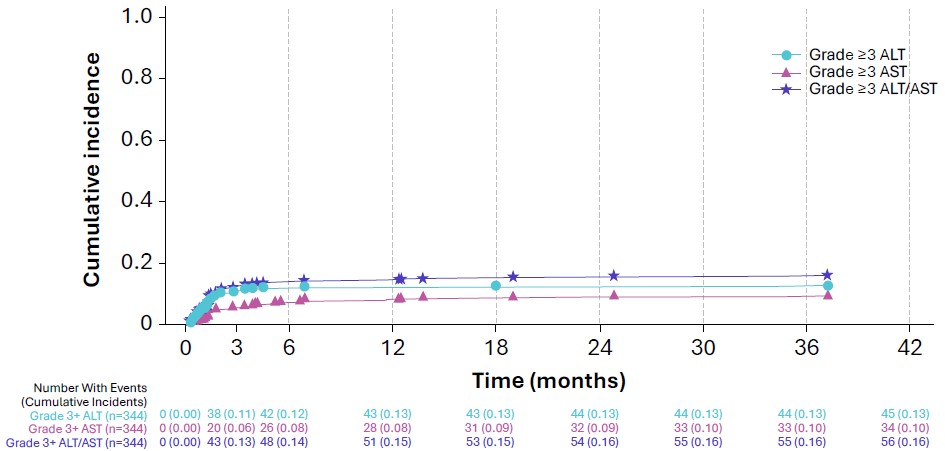
Data cutoff: October 28, 2024. aCumulative incidence was calculated as the cumulative number of patients with first onset grade ≥3 ALT/AST evaluation events during treatment period divided by the total number of patients who had at least 1 ALT/AST laboratory assessment. bSafety was assessed in all patients who received ≥1 dose of taletrectinib in TRUST-II (n=171) and TRUST-I (n=173).
Abbreviations
ALT, alanine aminotransferase; AST, aspartate aminotransferase; CI, confidence interval; CNS, central nervous system; cORR, confirmed objective response rate; DCR, disease control rate; DOR, duration of response; ECOG PS, Eastern Cooperative Oncology Group performance status; GI, gastrointestinal; IRC, independent review committee; m, median; mRECIST, modified Response Evaluation Criteria in Solid Tumors; NR, not reached; NSCLC, non-small cell lung cancer; PFS, progression-free survival; QD, once daily; RECIST, Response Evaluation Criteria in Solid Tumors; REP, response evaluable population; ROS1, c-ros oncogene 1; ROS1+, ROS1-positive; RR, relative risk; TEAE, treatment-emergent adverse event; TKI, tyrosine kinase inhibitor.
References
- Pérol M, et al. J Clin Oncol. 2025;epub April 3, 2025.
- Li W, et al. J Clin Oncol. 2024;42:2660-2670.
Acknowledgments
- We would like to thank all patients who participated in this study, the study investigators, and their staff
- This study was sponsored by Nuvation Bio Inc. Writing and graphical support were provided by David M. Jensen, PhD, of Peloton Advantage, LLC, an OPEN Health company, and funded by Nuvation Bio